Gainesville, FL
Garage Door Off Track: Why It Happens in Gainesville and What Fixing It Takes
Garage door jumped the track in Gainesville? We explain why 1960s-70s era homes here see this fault often and what the repair actually involves.
What Can Go Wrong
A door that's off track doesn't always look dramatic. Sometimes it's a panel hanging at an angle, a roller sitting outside the rail, or the door that stops halfway and won't budge either direction.
Door leaning on one side
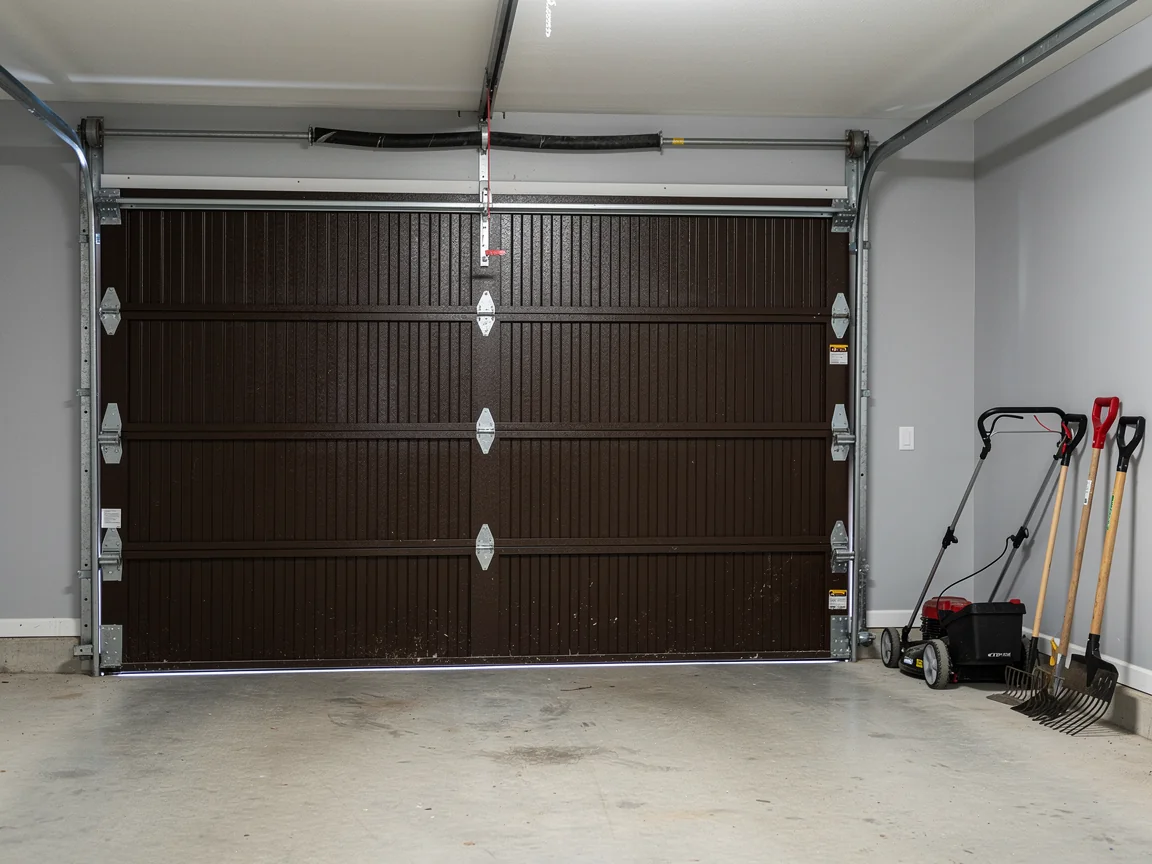
Other times a cable has snapped and the door is leaning hard against one side of the opening, which is the version that scares people the most because the whole thing looks like it might fall. The common thread is the rollers lost their line. Once a roller jumps the track, the door is no longer traveling on a straight path, and every inch it moves after that bends the track further or strains the opener trying to pull a door that isn't square.
Forced reverse damage
We see it most on doors that got forced - someone hit the auto-reverse, assumed it was stuck, and kept pressing the button. We also see it on doors where a hinge cracked or a roller stem snapped clean through, which is a wear failure rather than an impact.
Pry bar hazards
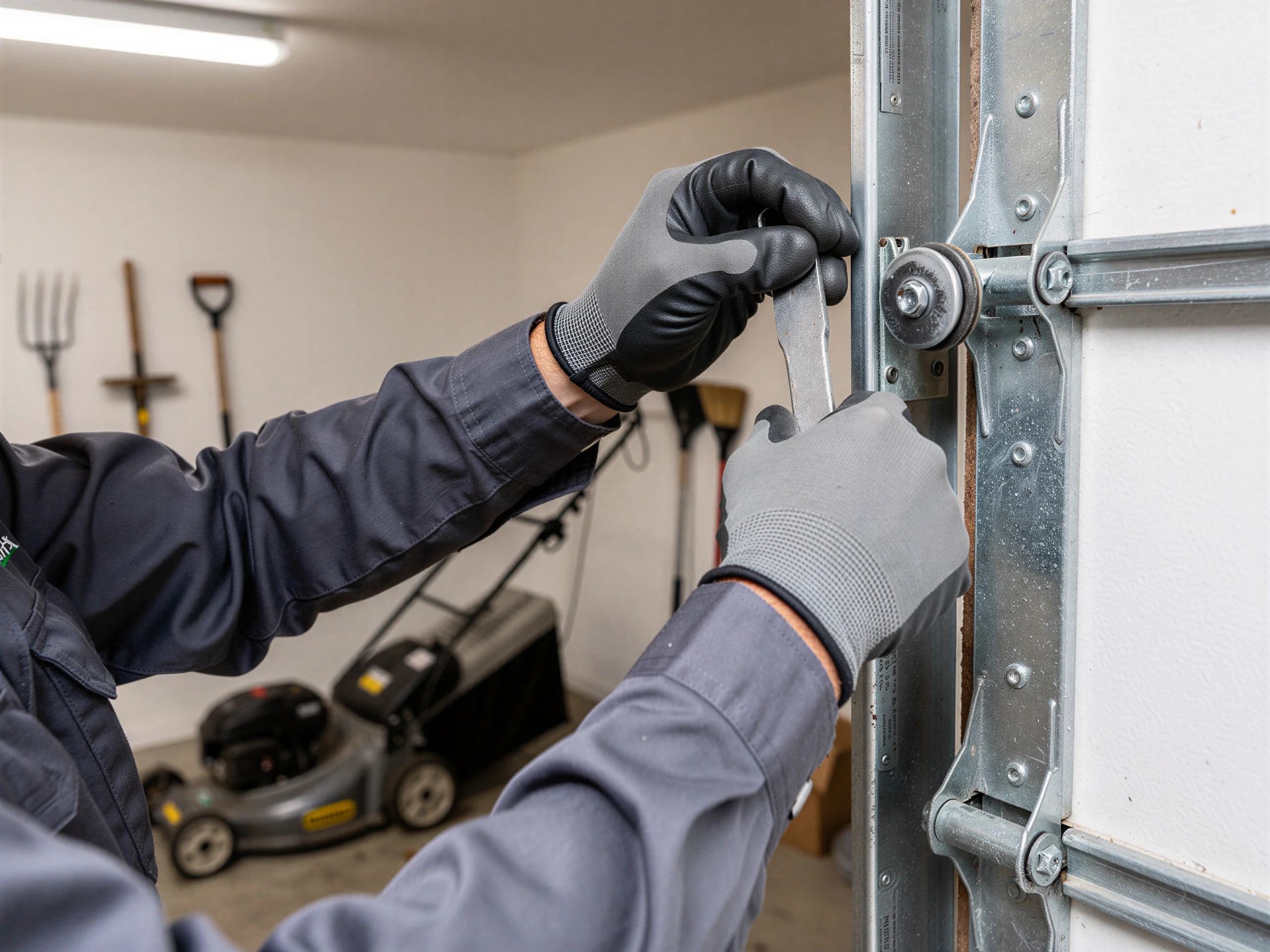
What we don't recommend is prying the door back onto the track yourself with a pry bar or a 2x4. If a spring is still under tension, that's how fingers get crushed. If the cable's broken, the door has no controlled way down. Both are jobs for someone with the right clamps and bars, not a weekend fix.
Why It Happens Here
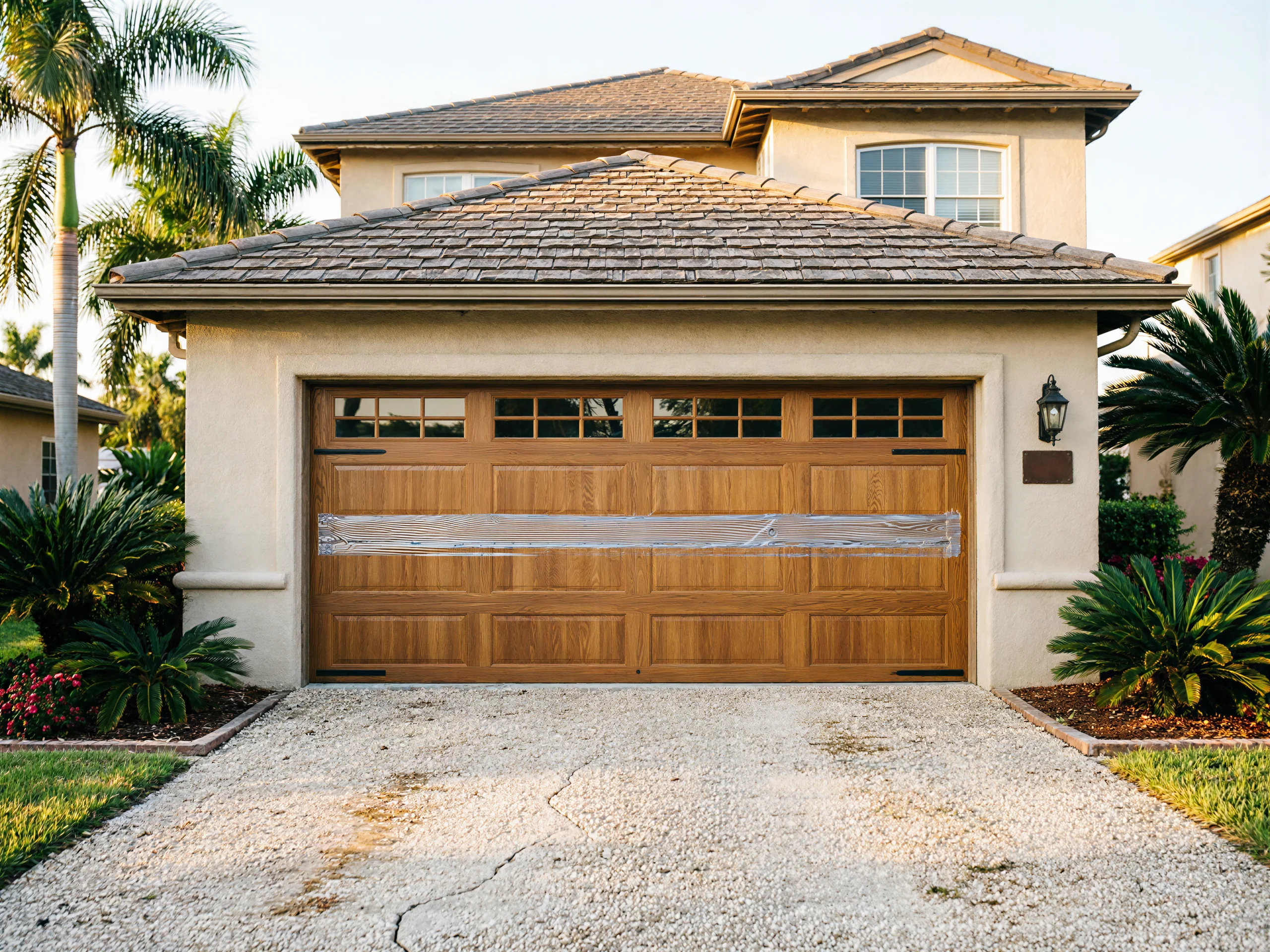
Most of the housing stock we work on went up between 1967 and 2004, with the bulk of it dating to the 1960s and '70s. Doors and track hardware from that era were built to a lighter standard than what goes in new construction today, and a lot of these houses still have their original track - steel that's thinner, rollers that were never upgraded to nylon, brackets that have had forty-plus years of expansion and contraction working the screws loose.
Gainesville's climate doesn't put ice-dam stress on a door the way a northern winter would - we're in a mild band with only occasional freeze risk - but that's not nothing. A hard freeze a few nights a year is enough to make old lubricant stiffen up overnight, and a door that's already fighting dry, gummed-up rollers is a door that's more likely to bind, jump, and come off its track the next time someone runs it in a hurry.
The other factor is simple age of the track itself. Track brackets lag-bolted into framing in the 1970s have had decades to work loose a sixteenth of an inch at a time. That's enough play for a roller to walk off the rail on a door that otherwise looks fine.
What the Fix Involves
First we find out if the track bent or if it's just the roller that jumped clean. A roller off a straight track is usually a controlled re-seat - we release tension safely, guide the roller back onto the rail, and check the bracket bolts while we're in there, since loose brackets are often what let it happen in the first place.
Bent steel stays bent
A bent track is a different job. Bent steel doesn't go back to true no matter how carefully you bend it back - it work-hardens and will bend again at the same spot under load.
Replacing the opposite track
On a bent section we replace that run of track rather than straighten it, and we check the matching track on the other side, because a door that's been fighting a bent rail on one side often has the opposite rail knocked slightly out of plumb too. We also check rollers, hinges, and cables while the door is apart, since a broken hinge or frayed cable is frequently what started the whole problem.
Sourcing older track widths
One limitation worth saying plainly: if the track or rollers are original to a house built in that 1960s-70s window, exact-match replacement hardware isn't something we stock on the truck for every style - sourcing the right-width track can add a day to the job rather than same-visit.
The Symptom
The giveaway is usually sound before it's sight - a grinding or popping noise right as the door starts to move, followed by it stopping short or traveling crooked.
Roller gap visible
Sometimes you'll see a gap between the roller and the track from a few feet away. Sometimes the door looks fine sitting still but won't complete a full cycle without the opener straining or reversing on its own.
Noise but still moving
If you catch it at the "it's making a noise but still moves" stage, stop using the door and call rather than running it a few more times to see if it clears itself.
Escalating roller derailment
A roller that's half off the rail tends to finish coming off on the next cycle, and at that point you've gone from a quick re-seat to a bent track and possibly a cracked panel. The households we see most often with this call are in houses with the original builder-grade track still in place - which, across this service area's older stock, is a lot of doors.
Questions
Common questions
Can I push a door back onto the track myself?
Not if there's any tension left in the system. A door held by a spring or cable that's still under load can move suddenly and hard. If the door is light enough to move by hand and nothing looks snapped, you can sometimes ease a roller back onto a straight rail - but if a cable's broken or the track is visibly bent, leave it and call.
Why does my door keep coming off the track in the same spot?
That usually means a bracket is loose or the track itself is slightly bent at that point, so every cycle the roller catches the same spot and eventually jumps. Re-seating the roller without fixing the bracket or straightening (or replacing) that section just buys you a few more cycles before it happens again.
Is an off-track door always a spring problem too?
Not always, but check. A door that jumped track because a cable snapped or a hinge cracked can leave the spring untouched. But if the door was already struggling before it came off - slow, heavy, uneven - the spring is probably part of the picture and worth having looked at in the same visit.
Explore more
Explore More Services In Gainesville, FL
Garage Door Installation for Gainesville's Older Housing Stock
Gainesville homes built mostly 1967-2004 often carry original hardware that doesn't fit current doors. Learn more →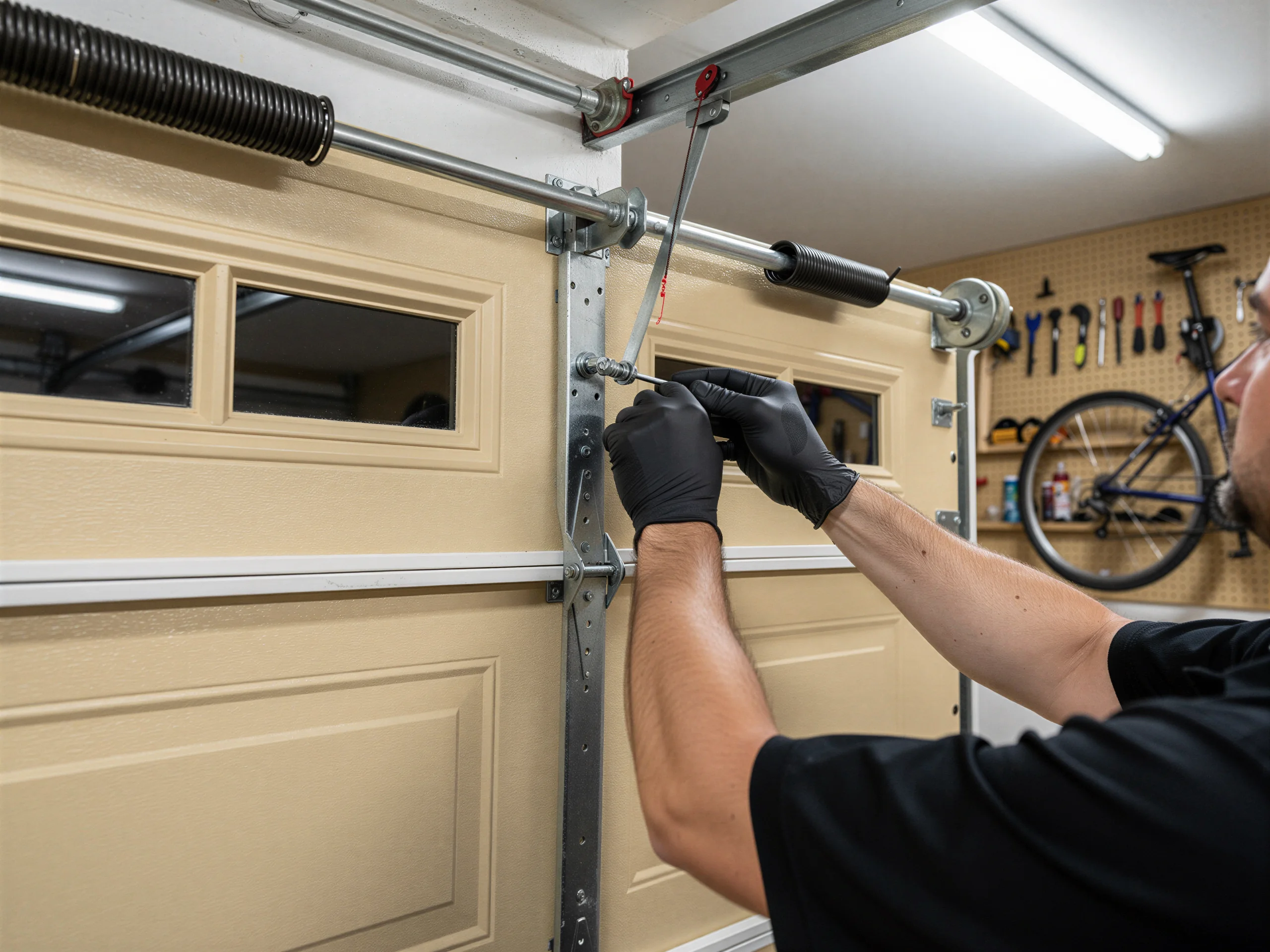
Garage Door Service for Gainesville's Older Housing Stock
Gainesville Garage Door Pros fixes springs, openers, and tracks on the 1960s-90s housing stock across Gainesville's neighborhoods, from University Park to Haile Plantation. Learn more →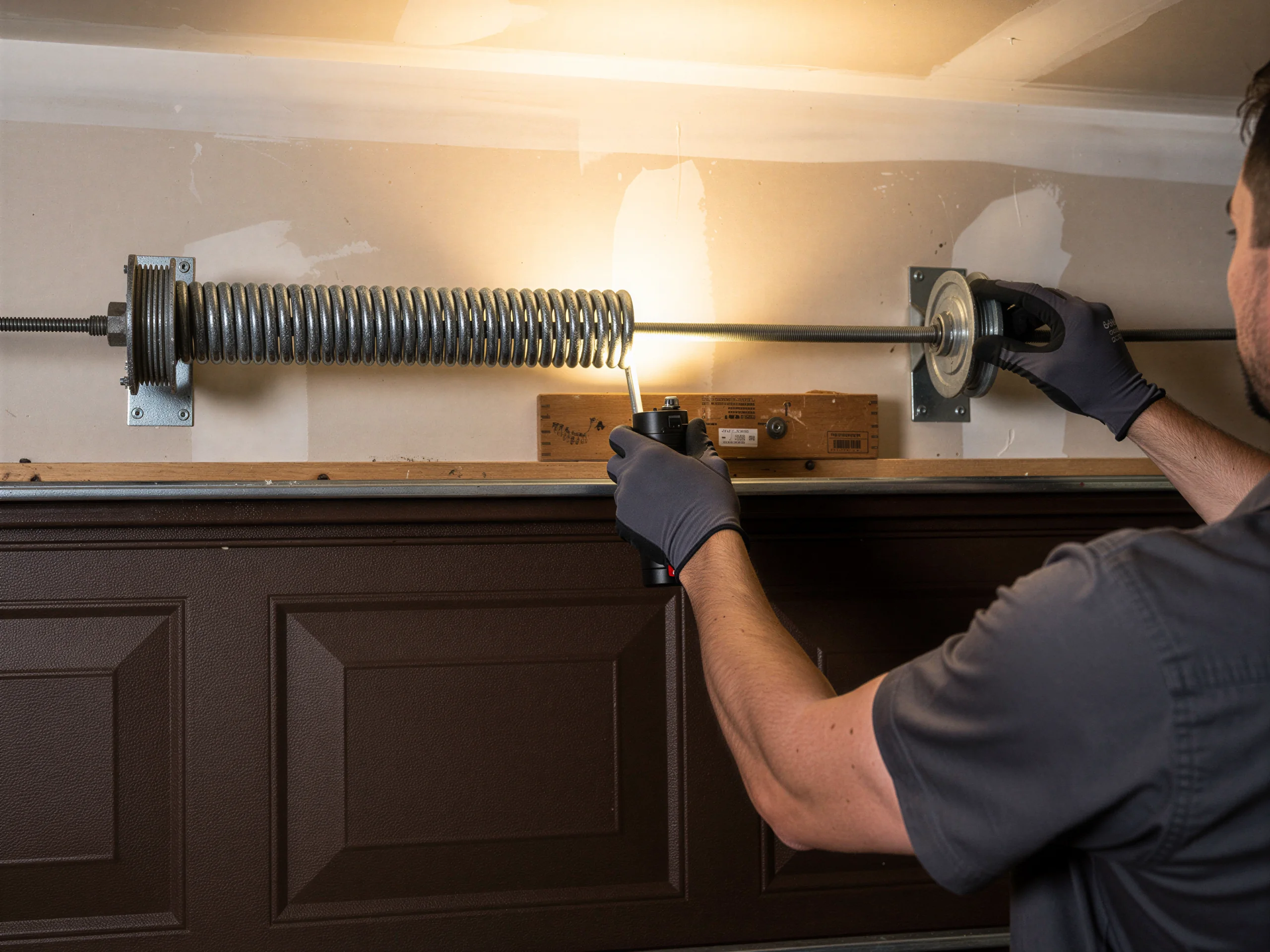
Garage Door Spring Repair Across the Gainesville Area
Broken torsion spring on a Gainesville garage door? Learn more →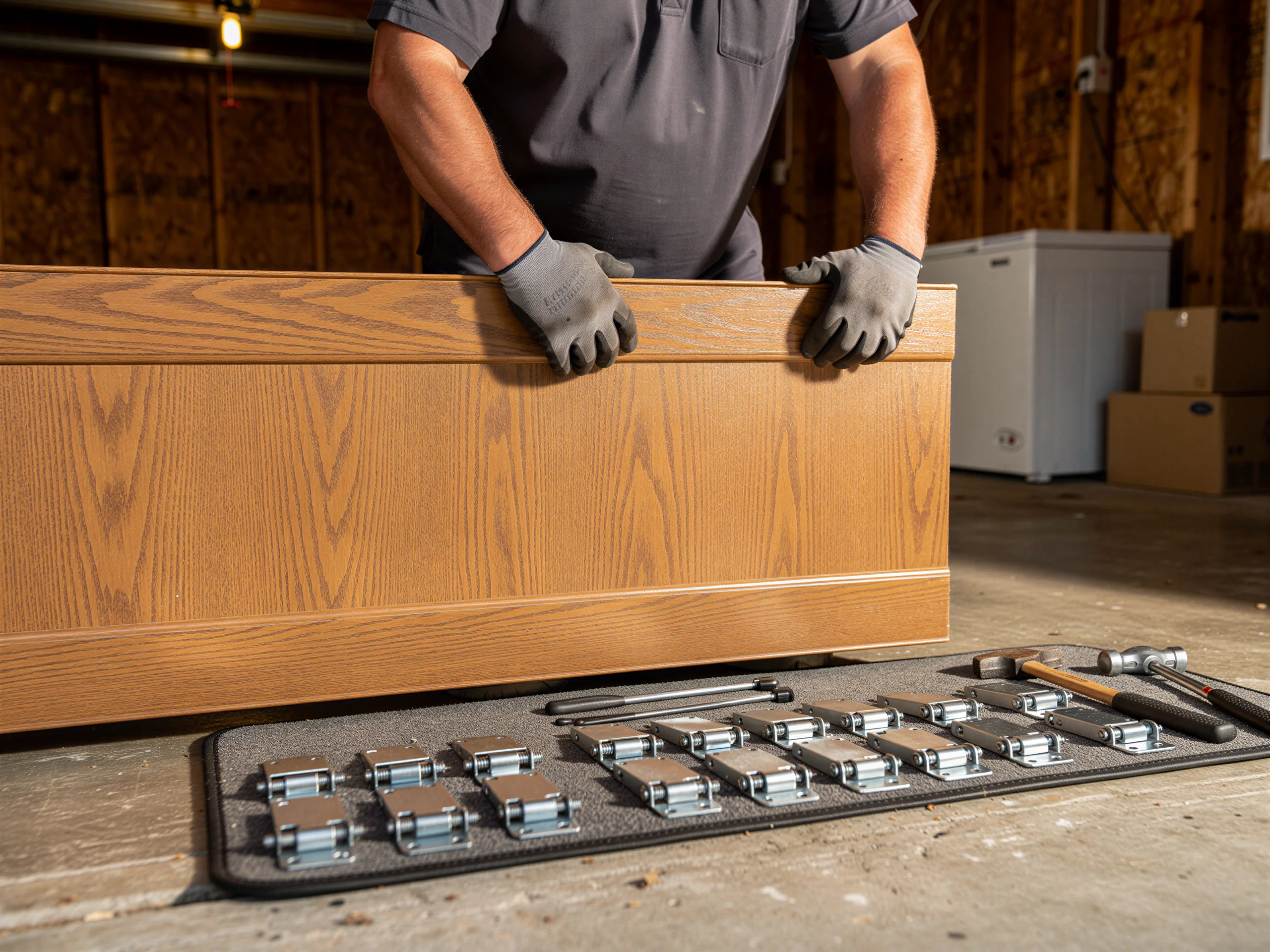
Garage Door Panel Replacement in Gainesville
Garage door panels on Gainesville homes built from the 1960s through the 1990s dent, rust, and warp with age. Learn more →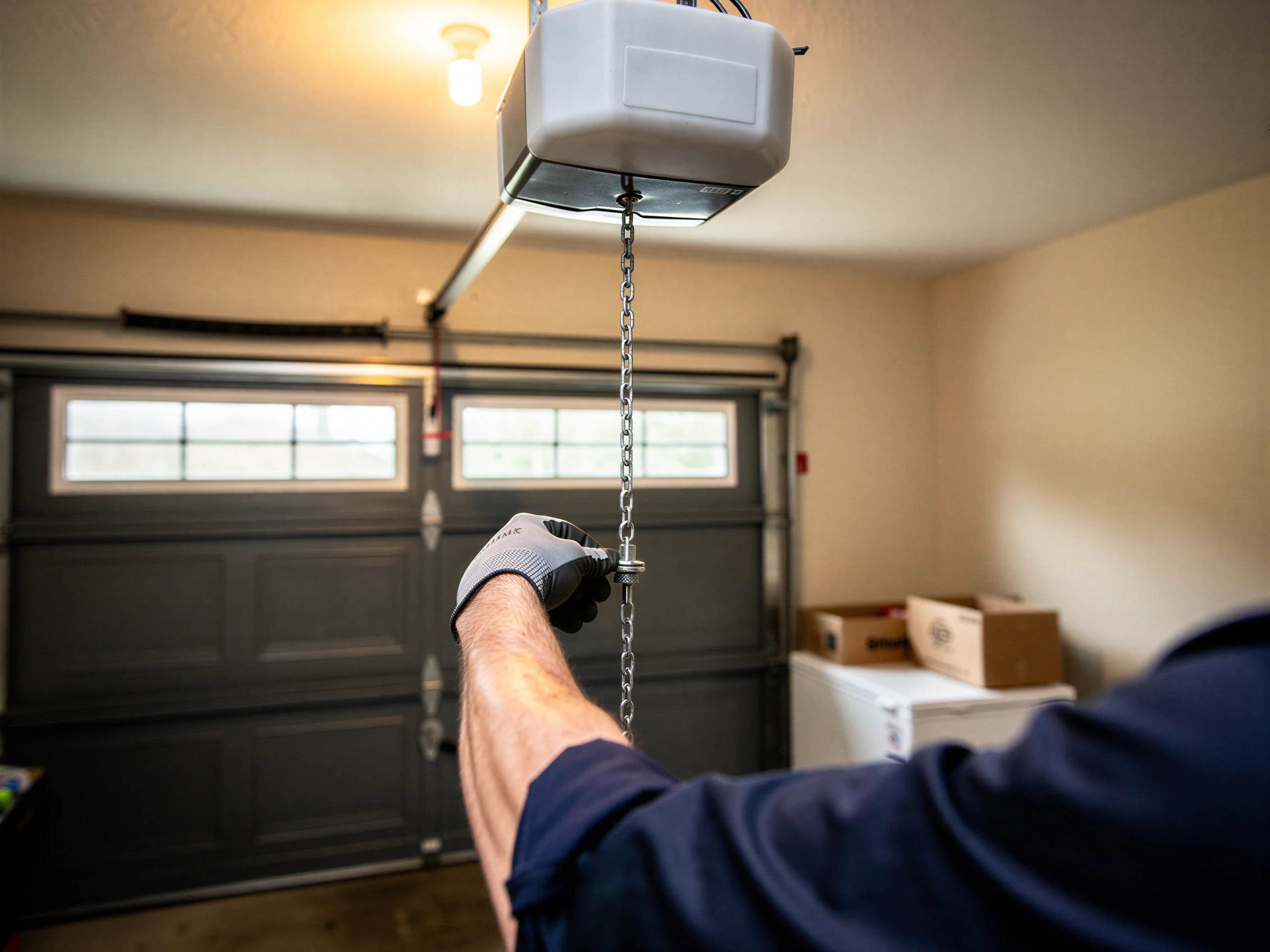
Gainesville Garage Door Opener Repair
Garage door opener repair for Gainesville's 1960s-80s homes: worn gears, failing circuit boards, and openers original to the house since the 1970s era. Learn more →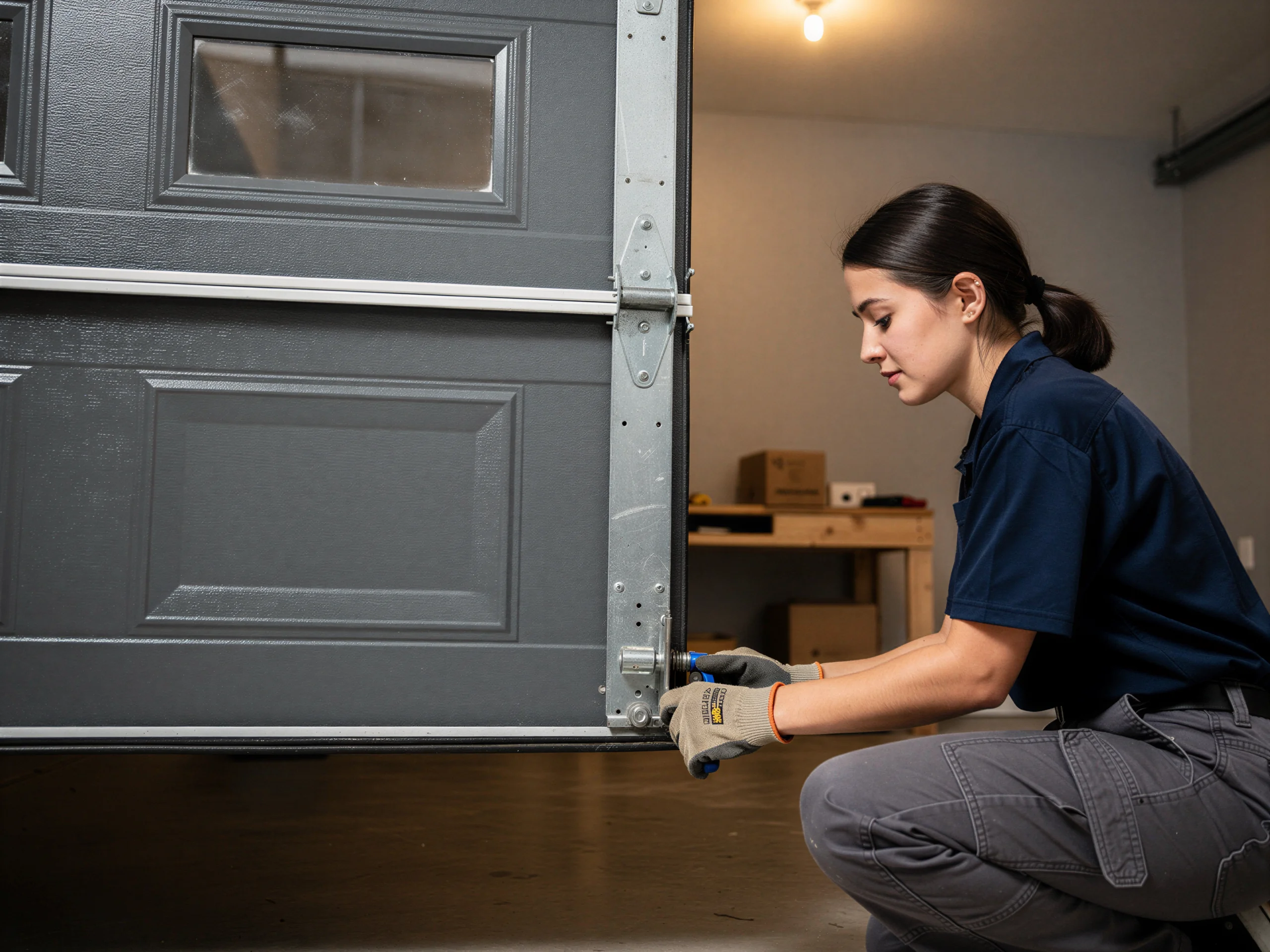
Garage Door Repair for Gainesville Homes
Gainesville garage door repair for homes built from the late 1960s through the early 2000s, with fixes suited to the area's mild, humid climate and aging torsion hardware. Learn more →Ready when you are
Garage door off its track in Gainesville?
Gainesville Garage Door Pros repairs and installs garage doors, springs and openers in Gainesville, FL and the surrounding area.